KORA OR ORGANZA SILK Many of us are fond of beautiful fabrics, their soft touch on the body and the classy, royal aura it adds to our personality. Back in time, fabrics like silk were available and affordable to the affluent few, not in the 21st century though. Women, especially, are boasting different fabrics with grace and panache. Kora Fabric, or as some may call it ‘Organza’ Silk is one of such fabrics. Kora Silk is used to make Kovai Kora cotton saree. Coimbatore, a region in the Tamil Nadu State India is popular for these sarees. As a matter of fact, the Government of India recognized it as a Geographical indication in 2014-15. ORIGIN AND HISTORY OF KORA/ORGANZA SILKS Kora silk from Varanasi or Banaras - The quality of Kora silk is smooth and sheer texture which is much dull in comparison to other silk. Kora silk has two varieties, either it is coarse or soft... There is huge demand for India Silk Sarees across the world due to style, smooth and text...
Phulkari Indian traditional textile from punjab
- Get link
- X
- Other Apps
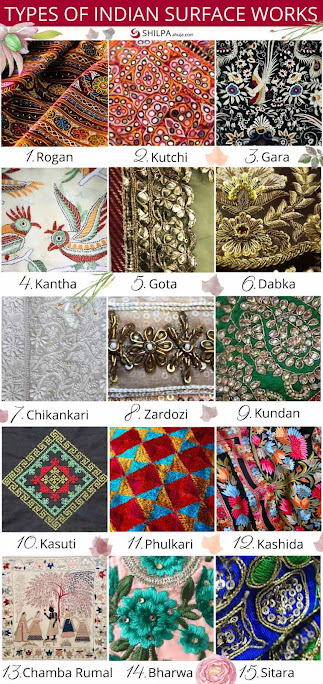
b) Phulkari from Punjab
Phulkari, the geometric, colorful and traditional embroidery of Punjab is a handcrafted practiced exclusively done by women. Translated as phul (Flower) and Kari (the artwork, motifs or design). Phulkari is used in both daily and occasional attire in form of dupatta, handbag and Patiala suits. The .embroidery or stiches gives it a rich mosaic. The finest decorative work is done in this phulkari pattern called Bagh, and the predominant geometric designs covered the entire surface of the background cloth .This intricate work was done for special occasions using - effect with unique untwisted silk thread in bright colors using geometric patters or floral designs.
Video which explain more about phulkari embroidered textiles from India, please find the link below
- Get link
- X
- Other Apps
Popular posts from this blog
Types of Indian handloom textiles
4 main types of Indian handloom textiles 1) Embroidered textiles Embroidery is the art of needlework resulted from the passion of womenfolk to express their creativity and ornament their apparel, saree, fabric and household textiles. Primarily a feminine art, young girls learned the craft from their mothers and older women in the family. The artistic expressions of the embroiderer are skillfully created on fabric with a simple tool, needle or a hook needle known as awl or tambour. Different embroidery styles have developed regionally in India that has a distinct identity of their own. Cotton, silk, woolen thread or gold/silver is used to embroider on various media, from cotton, silk, woolen fabric to velvet and leather. Besides thread, pieces of fabric, beads, mirrors, shells, coins, precious stones and sequins are also used for e...
Indian Traditional Handloom Textiles
Indian Traditional Handloom Textiles The wide range of design and weave, specific to the region of their origin, are masterpieces enhanced by the skills of the particular craftsmen and their tradition. The crafts thrived on the exploration and ingenuity of the craftspeople and their knowledge of locally available fabric, saree or other textile product. Each state or north, east, west and south India displays a variety of designs, producing distinct textiles, Saree and crafts indigenous to the region. Thus traditional Indian textiles can be classified according to the region of production. To know more about Indian handloom textiles and which state they are belong to, please find the link below www.fabricofindia.com f 4 main types of Indian handloom textiles 1) Embroidered textiles Embroidery is the art of needlework ...

Comments
Post a Comment